

La Habra Heights, from where I sit
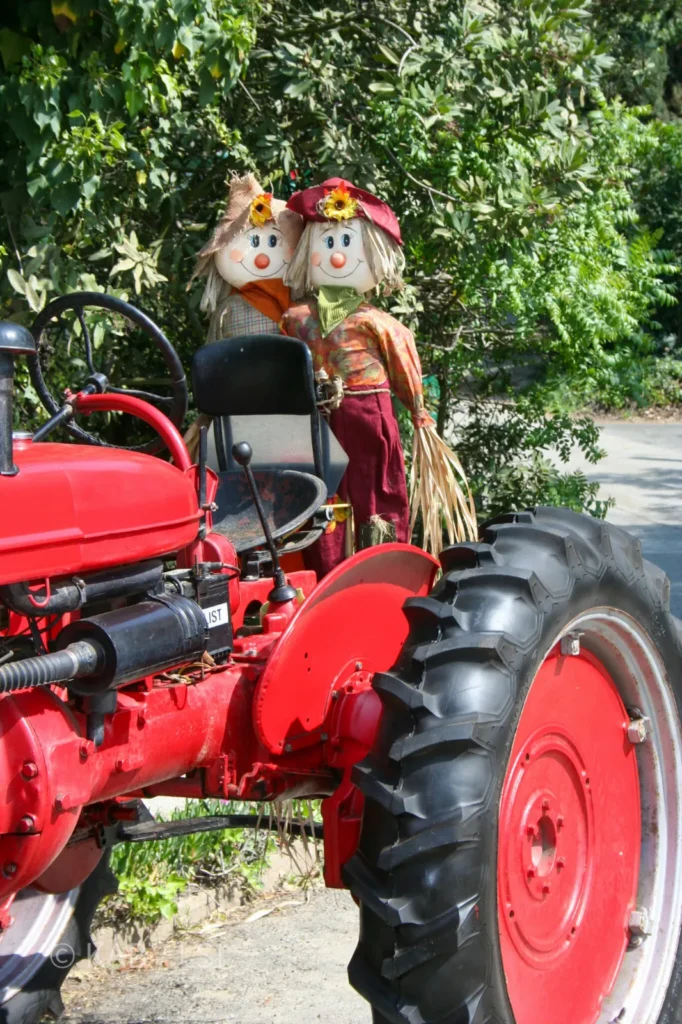
A red tractor and its passengers, La Habra Heights.
The first thing you notice in La Habra Heights is what is missing. There are no sidewalks. The roads follow the hills, the lots run an acre or more, and the houses sit back from the pavement behind trees and fences, so a walk here happens on the shoulder, single file, with a dog who would prefer to be in front.
It has been its own city only since December 4, 1978, which is young for a place that feels this settled. People came for the land and the quiet and stayed for both. On a Saturday the trail people are out on the Powder Canyon loop. Families gather at Hacienda Park when the city puts on an event there. Past the fairways of Hacienda Golf Club, which is private and has been here longer than the city, the road keeps climbing.
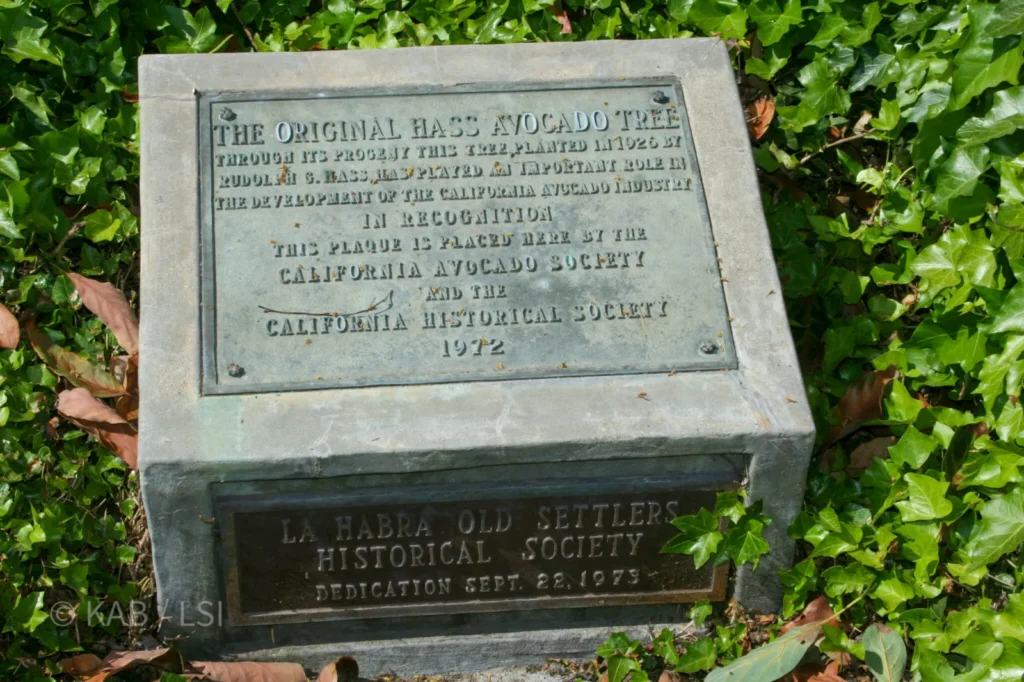
And on West Road there are two plaques that most people drive past without slowing down. They mark where the first Hass avocado tree grew. One of the best-known stories in California farming started on that road.
I’m Ruben J. Martinez, an estate planning attorney licensed in California and Ohio. I work with La Habra Heights families by video, by phone, and in person by appointment.
The houses
La Habra Heights families do not just own a house. They own a piece of a hillside. An acre, often more. A long driveway, a well-kept slope, sometimes a few trees that were here before the house was. The people who bought these places usually bought them for good, and a lot of them are still in them decades later.
That makes the land the plan, whether anyone wrote one or not. It is usually the largest thing the family owns, and the hardest to divide. One child wants to keep it. One wants to sell. One wants the view and none of the upkeep. A house on an acre in the hills is not something you can split down the middle like a bank account.
And in many of these houses, the deed still carries the parents’ names and nothing else. That means a court will be involved when they are gone. A living trust changes that. Same land, same house. A different piece of paper, and a much easier year for the children.
What La Habra Heights families ask me
We have an acre in La Habra Heights. Do we need a trust, or is a will enough?
A trust. A will tells the probate court what you wanted, but it does not keep your family out of that court. A revocable living trust owns the property while you are alive and lets your successor trustee pass it on without a judge. I would draft the trust, record a new deed moving the property into it, and line up your accounts and beneficiary designations so nothing is left outside the plan.
My father died and the house in the Heights is in his name. Where does probate happen?
La Habra Heights is in Los Angeles County, so probate goes to Los Angeles County Superior Court, whose probate division sits at the Stanley Mosk Courthouse downtown. Expect many months: a petition, a hearing to appoint the personal representative, notices, an inventory and appraisal, a creditor period, and a final accounting. I file, keep the calendar, appear for you, and tell you plainly what comes next.
If I move into my parents’ house after they pass, can I keep their property-tax base?
Sometimes. Under Proposition 19, a child can generally keep a parent’s assessed value only on the parent’s primary home, only by making it the child’s own primary home within the time allowed, and only up to a limit on the increase in value. Hillside property with acreage can push past that limit. A rental or second home no longer qualifies. I would look at your parents’ assessment and your plans and give you a straight answer.
Mom had a trust, but the house was never deeded into it. Now what?
That is common, and it is fixable. A successor trustee can file a Heggstad petition asking the court to confirm the property belongs to the trust, if the trust documents show that was the intent. It is usually faster than a full probate. I would review the trust, its schedule of assets and the deed, and if the evidence is there, file the petition and help you finish the administration.
How it works from here
Your first and second consultations are free, by video or phone. We talk about your family, your property and what you want to happen to it. Then I send a short list of what to gather: the deed, recent statements, and the names of the people you trust to step in.
I draft the documents and send them to read at home. We change what needs changing. Then we sign and notarize, in person by appointment or with a mobile notary, and I record the deed that puts the property into the trust.
For most families it takes a few weeks. On a property that has changed hands inside a family more than once, finding the last recorded deed is usually the slow part.
When the family is home
The first Thanksgiving after the girls were born, I looked around the table and realized every grown-up there assumed somebody else had the paperwork. Nobody did.
Hillside families gather the same way everyone does, with more parking. The parents want to say it; they have been meaning to for years. The children do not want to hear it, because hearing it means picturing the place without the two people who have always been in it. So the pie comes out and the subject goes back in the drawer.
The question that gets past that is not about dying. It is about finding things.
“Mom, if something happened, where would we even look?”
It is a gift to ask. A parent can answer with a drawer or a name. And if the honest answer is “I don’t know,” the whole table has just learned what needs doing next.
If someone in your family has just died
This week: get several certified copies of the death certificate, secure the house, the gate and the mail, and look for a will or trust. Do not hand anything out yet, even to the people who are entitled to it.
This month: find the accounts, notify Social Security and any pension, and call me. If there is a trust, I guide the successor trustee through the required notices, the inventory and the distribution. If there is no trust, I file the probate petition with Los Angeles County Superior Court at the Stanley Mosk Courthouse. Either way, I carry the filings and the deadlines so the family can grieve without carrying the paperwork.
Around town
The mother tree on West Road
The Hass avocado started with one tree in La Habra Heights. Rudolph Hass, a mail carrier, planted it in 1926. He patented the variety in 1935, and when the patent ran out in 1952 it had earned him about $4,800 in all. That was the whole fortune.
The tree outlived the patent by half a century. It finally died of root rot in 2002 and was cut down that September. Two plaques on West Road mark where it stood. Wood from the tree did not go to waste; the California Avocado Society uses it for its plaques.
It is a very La Habra Heights kind of story: a working man, a piece of hillside, something planted carefully and left to grow. Hass never saw most of what came of it.
Most families plant that way too. A house, a habit, a way of doing Thanksgiving. The point of a plan is to make sure what you planted is still in good hands after you.
Snow on Mt. Baldy
When La Habra Heights families want winter, they look to Mt. Baldy. The lifts there have been carrying skiers since 1952, long enough for one family to collect three generations of ski stories on the same mountain.
A Baldy day does not need much. An early start, chains in the trunk just in case, a thermos, a bag of dry socks for the ride home. Some families ski. Some just want the kids to touch real snow and throw a little of it at each other. Either way the car comes back down quieter than it went up, everybody tired in the good way.
Those are the days children remember as grown-ups, long after the details blur: who was in the car, who fell first, who laughed. Holding on to the people in that car is the real work. The paperwork is just how a family makes sure it can.
Talk with Ruben
California: (909) 375-3377. Ohio: (330) 960-6084. Your first and second consultations are free, by video or phone, and I meet in person by appointment.
Mailing address in Brea, California.
Rudolph Hass planted one tree in 1926 and never saw most of what grew from it. That is about as good a description of an estate plan as I know.
More from Ruben: estate planning, uncontested probate and trust administration · why a living trust matters if you own a home · Also serving La Habra, just down the hill, and Whittier.