

La Habra, from where I sit
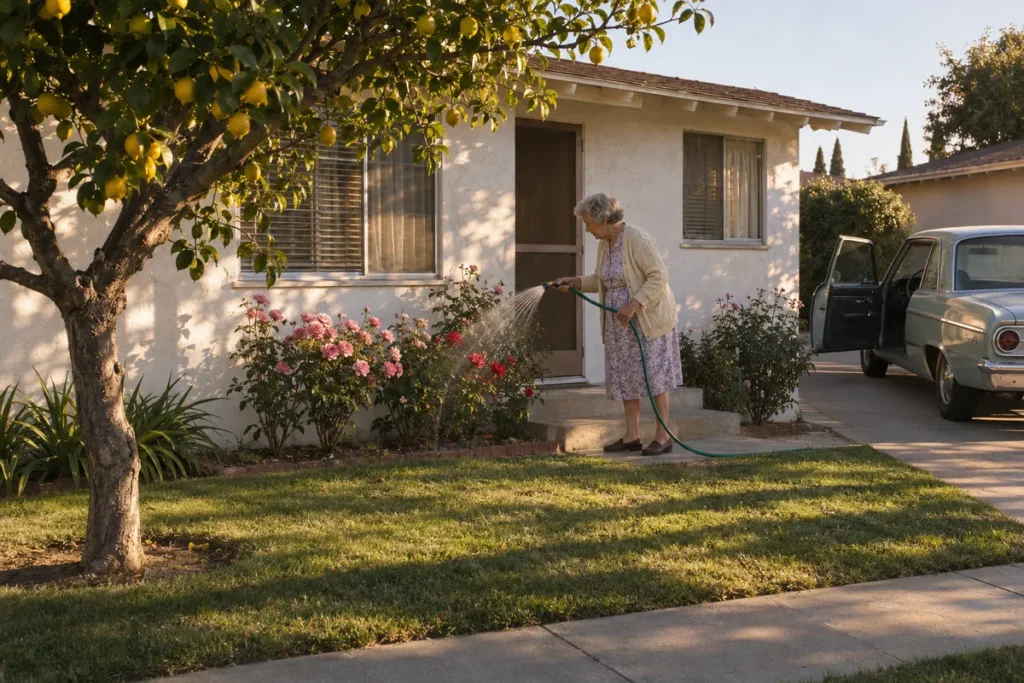
Still in the house she and Dad bought in 1968.
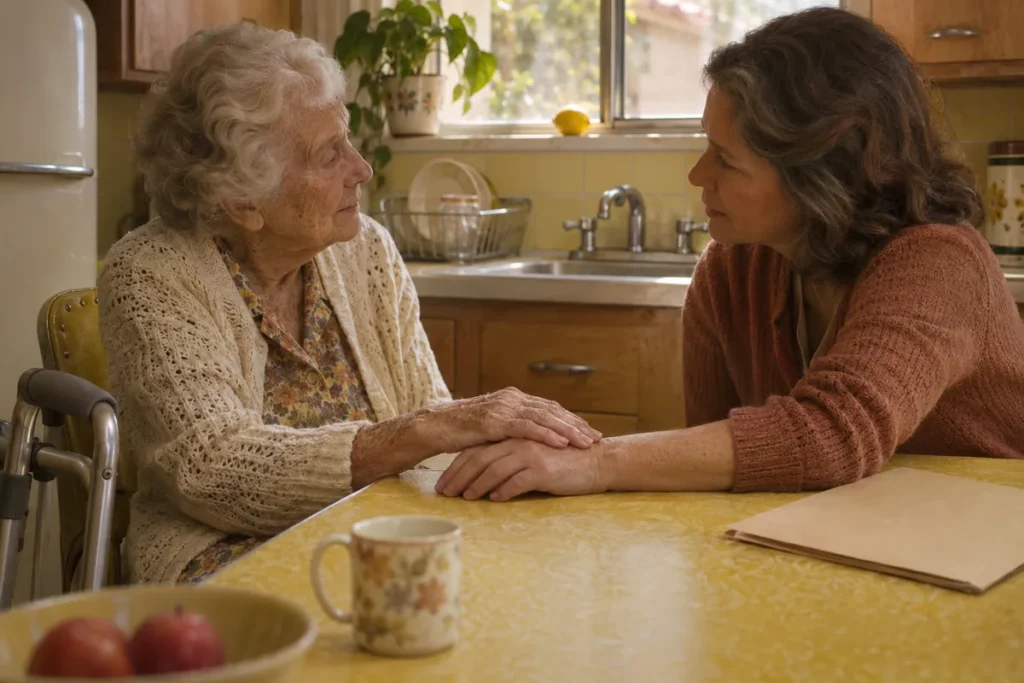
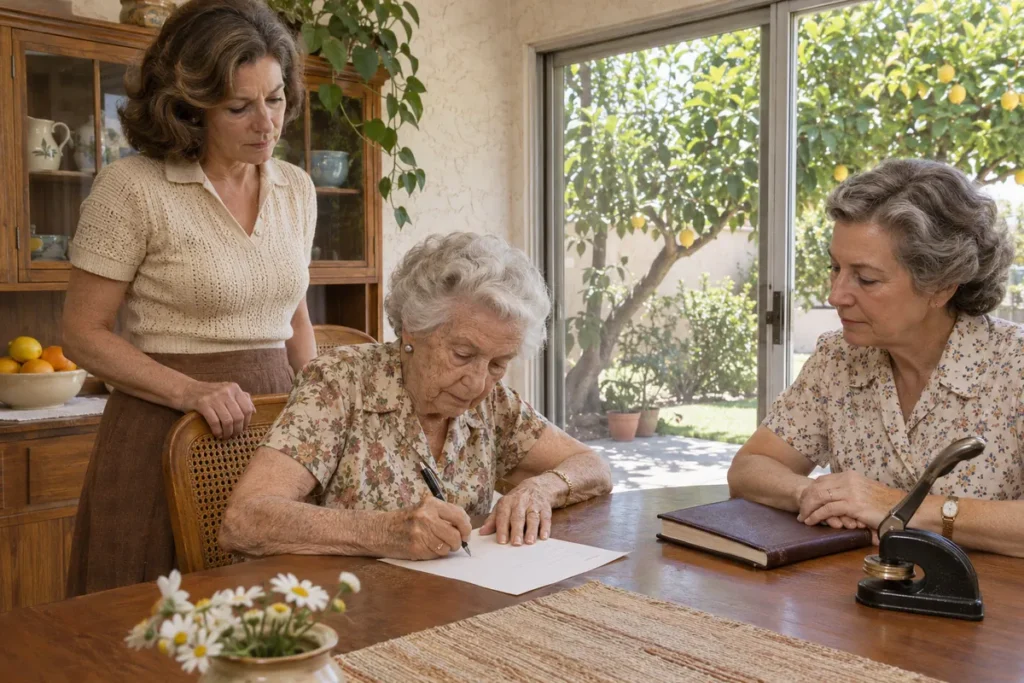
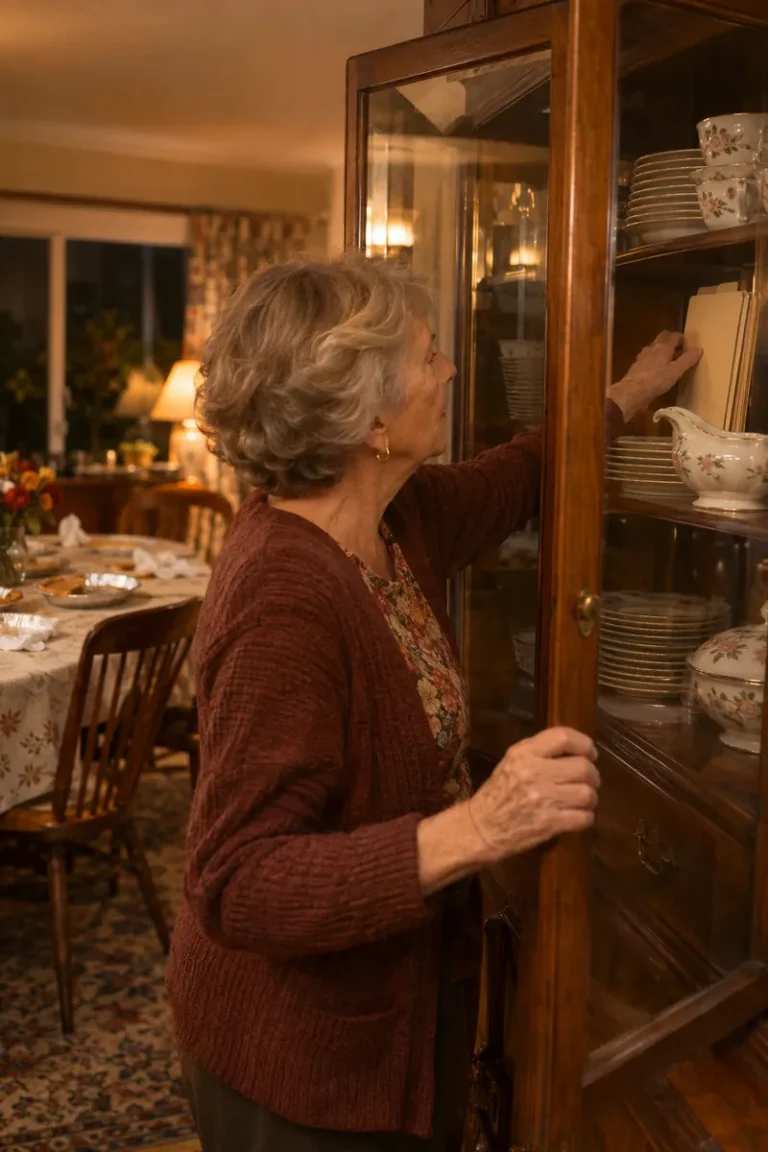
Photos on this page are illustrations and do not show actual clients.
Eight in the morning at Portola Park, the dog pulling toward the ballfields because somebody has left a tennis ball in the grass, and the dog has never once been wrong about that. The girls are on the playground. My wife is on the bench with the coffee. And I am looking at the old train depot at the edge of the park, the one from 1923 that La Habra turned into the Children’s Museum in 1977, with the caboose parked beside it. Every kid in this city has walked up those steps. Mine have.
La Habra is a small city that grew up fast. Five thousand people in 1950. Sixty-some thousand now, in a little over seven square miles. Which tells you what the houses are: block after block of one-story homes from the fifties and sixties, stucco and a lawn and a lemon tree, built for people who worked and raised families and stayed. Stand at La Habra Boulevard and Euclid, by the civic center and the county library from the sixties, and every street running off at right angles is full of those houses.
Saturdays we end up at La Bonita Park on Whittier Boulevard, where the softball fields are lit, the skate park is loud, and the stream-bed trail is quiet if you walk far enough.
I’m Ruben J. Martinez, an estate planning attorney licensed in California and Ohio. I work with La Habra families by video, by phone, and in person by appointment.
The houses
The La Habra story I hear most often goes like this. Mom and Dad bought the house in 1961 or 1968 or 1974. They paid it off before the kids were out of high school. Dad is gone now. Mom is in her eighties and still in the house, and the house is worth more than everything else she owns put together, several times over. Three children. One of them lives ten minutes away and does the groceries. One is in Arizona. One is not speaking to the other two.
The house is the inheritance. It is also, for the child nearby, a worry: what happens when Mom needs care, and what happens to the house after. Nobody has seen a deed in forty years. Nobody knows whether there is a will, or where.
What I can tell you is that in most of these houses, the deed still carries a person’s name, not a trust’s. That is the gap between a family that settles things at the kitchen table and a family that settles them in a courtroom in Costa Mesa.
What La Habra families ask me
My parents’ La Habra house is paid off. Do they need a trust or is a will fine?
They need a trust. A paid-off house in a person’s own name goes to probate when that person dies, and a will does not change that; it just tells the court who gets it after the court is done. A revocable living trust lets the house pass to the children with no judge involved. I would meet with your parents, by video or in their living room by appointment, draft the trust, and record the deed moving the house into it.
If Mom goes on Medi-Cal for a nursing home, does the state take the house?
In general terms, California’s Medi-Cal recovery program can make a claim against what is left in a person’s estate after they die, but current law limits that claim to assets that pass through probate. A house held in a properly funded living trust is not in the probate estate. That is one of the quieter reasons I push La Habra families to get the trust done while a parent is still well. I would review the whole picture and tell you where the house stands.
My father died with no trust. What does probate in Orange County look like?
Months, at minimum, and it is public. I file a petition at Orange County Superior Court, which hears probate at the Costa Mesa Justice Complex, the court appoints a personal representative, we publish and send notices, inventory and appraise everything, wait out the creditor period, and then ask the court for an order to distribute. I handle every filing and every deadline. Your job is to answer my questions and to let your family be a family.
Dad had a trust but the house was never put in it. What now?
This is common, and California has a fix. A Heggstad petition asks the court to confirm that the house belongs to the trust because the trust documents show that was the intent, even though the deed was never changed. It is far shorter than a full probate. I would look at the trust, the schedule of assets, and the deed, and if the evidence is there, I would file it.
How it works from here
Your first and second consultations are free, by video or phone. Bring your questions and your parents’ questions. I listen first.
Then a short list of what to gather: the deed, the mortgage payoff letter if there is one, account statements, and the names of the people who should step in. I draft the documents and send them to read at home. We fix what reads wrong. Then we sign and notarize, in person by appointment or with a mobile notary who comes to the house, and I record the new deed.
For most La Habra families this takes a few weeks. For a parent in her eighties who wants it done, I move faster than that.
When the family is home
The first Thanksgiving after the girls were born, I counted the grown-ups at our table and realized every one of us thought somebody else had the paperwork. We were a family of people who each assumed the other had handled it.
I see the La Habra version every year. Mom wants to say it. She has the folder. The kids change the subject to the Cowboys game, because hearing it means picturing the house with the lights off. So the pie comes out and the folder goes back in the hutch.
The question that gets around all of that is not about dying. It is about finding.
“Mom, if something happened, where would we even look?”
That is a gift to a parent. She can answer with a place: the hutch, the hall closet, the lawyer’s name on a card in her wallet. And if her honest answer is “I’m not sure,” then the whole table has just learned the one thing worth knowing that day.
If someone in your family has just died
This week: get several certified copies of the death certificate, lock the house, collect the mail, and look for a will or a trust. Do not clean out the house yet, and do not give anything away, even to the sibling who was promised the dining set.
This month: find the accounts, notify Social Security and any pension, and call me. If there is a trust, I help the successor trustee with the required notices, the inventory, and the distribution. If there is not, I file the probate petition at Orange County Superior Court, Probate, at the Costa Mesa Justice Complex, and I carry the filings and deadlines so the family can grieve without carrying the paperwork.
Around town
El Cholo on Whittier Boulevard
The El Cholo name goes back to 1923, in Los Angeles. The La Habra room is its own story. It opened in 1962 as an 800-square-foot take-out counter in Chantry Square, with redwood picnic tables outside and Tijuana lamps for light. It grew from there. The maple tables inside came from the old La Habra Inn, so a meal at 840 E. Whittier Blvd. is eaten, in a small way, on a piece of the town’s past.
Sixty-some years is long enough for a restaurant to become a family’s calendar. The anniversary dinner. The table after a christening. The night a son came home on leave. People tell time by places like this, and La Habra has been telling time at El Cholo since the Kennedy years.
When a family starts talking about what matters to them, it is often a place like this that comes up first, before the house or the accounts. That is a good place to start.
Across the water to Catalina
From La Habra, the island is closer than it looks on a map. The Catalina Express has been running boats since 1981, and from Long Beach the crossing takes about an hour. That makes Catalina the kind of weekend a family can actually pull off: drive to the harbor in the morning, be standing on the island before lunch.
The crossing is part of it. Kids press against the windows. Somebody gets a little green and somebody else is unbearably cheerful about it. On the island there is nothing to do but walk, eat, and sit by the water, which turns out to be exactly what a family needs once or twice a year.
Plenty of La Habra families have a Catalina photo on the refrigerator, everyone squinting into the sun on the boat deck. Those pictures outlast the trip by decades. They are the record of who was there.
Talk with Ruben
California: (909) 375-3377. Ohio: (330) 960-6084. Your first and second consultations are free, by video or phone, and I meet in person by appointment.
Mailing address in Brea, California.
In 1977 somebody looked at a fifty-year-old train depot at Portola Park and decided it should hold something for the next generation. Your house can do the same thing. It just needs the paperwork.
More from Ruben: estate planning, uncontested probate and trust administration · why a living trust matters if you own a home · Also serving Brea, Whittier and La Habra Heights, just up the hill.